Picture two traders, both long BTC at 10x, both with the same total capital. The market drops 6%. Trader one posted everything as margin on day one; they are sweating but intact, and their capital earned nothing while it waited. Trader two posted a slice as margin and parked the rest in yield-bearing assets that their exchange accepts as collateral. Same drop, and they top up margin in two clicks, from reserves that were earning while they waited.
Same market. Same direction. Structurally different outcomes. The difference is not prediction, it is plumbing: knowing what can become margin, and how fast.
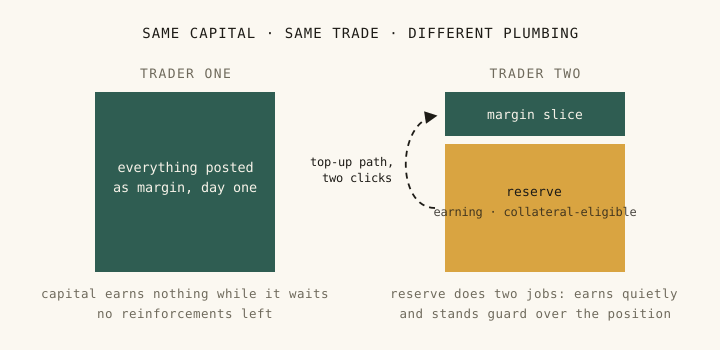
This article explains the plumbing. It is not a recommendation to trade at 10x, which is an aggressive amount of leverage; the liquidation explainer shows a 10x long dies roughly 9.5% below entry.
The mechanic: unified collateral
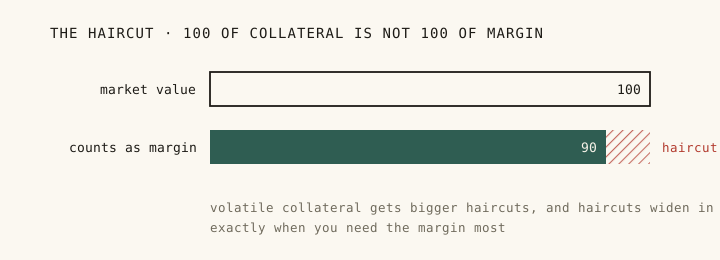
Modern derivatives exchanges (Bybit's unified trading account is the prominent example) let one account hold many assets, and let several of those assets count as margin collateral simultaneously. Stablecoins, BTC, ETH, and certain yield-bearing instruments can all back the same position, each discounted by a "haircut" (the exchange values your collateral below market to protect itself).
Three consequences follow:
- Margin is a property of the account, not the position. Equity anywhere in the account can defend a position under pressure.
- Reserves need not be idle. Some assets earn while sitting in the account, and some earn products allow the balance to count toward collateral at the same time.
- The haircut is the fine print that decides everything. An asset with a 10% haircut contributes only 90% of its value as margin. Volatile collateral gets bigger haircuts, and haircuts can be raised during stress, exactly when you need the margin most.
The structure some traders use
The pattern, described mechanically: a trader opens a leveraged position with a deliberately small share of capital as initial margin, and holds the remainder in stable, yield-bearing form inside or adjacent to the account, pre-checked as collateral-eligible. If the market moves against the position, the reserve converts to margin (or already counts as margin) and pushes the liquidation price further away. If the market moves favourably, the reserve simply kept earning.
The appeal is capital efficiency: the reserve does two jobs, earning quietly and standing guard.
Where this structure fails
Every layer adds a failure mode, and honesty about them is the point of this article.
The yield asset is not risk-free. Park reserves in a yield product and you have stacked the five yield risks on top of your trading risk. A de-peg or redemption freeze in your reserve asset during a drawdown is the double-death scenario: your position is bleeding at the same moment your rescue capital is trapped or shrinking.
Conversion takes time you may not have. Crypto moves fastest when it moves against you. A reserve that takes minutes to unwind can be too slow for a liquidation cascade measured in seconds. "Swappable into collateral" on a calm Tuesday is not the same as during a 12% wick.
Haircuts move. Exchanges widen collateral haircuts in volatile conditions. Reserve value you counted on can be marked down precisely when it matters.
Topping up is doubling down. The strategy's dark side is psychological. Feeding margin into a losing position feels responsible ("defending the position") and is mathematically identical to increasing your bet after being wrong. Without a pre-committed maximum (a point where you accept the loss and stop feeding), the reserve structure becomes a machine for converting a survivable loss into a total one, slowly.
The checklist form
For anyone studying this mechanic, the questions that matter, in order:
- What does my exchange accept as collateral, at what haircut, and can the haircut change?
- How fast, in seconds, does my reserve become usable margin on a bad day?
- Which of the five yield risks am I holding in the reserve itself?
- What is my pre-committed maximum top-up, decided before the trade, written down?
- At what point does the position simply get closed instead of defended?
If the last two questions have no answer, the plumbing is irrelevant. The engine that liquidates undefended positions does not care how elegant the reserve structure was.
Education, not advice. Leveraged trading can lose more than your initial margin, and yield products carry their own risk of loss. Nothing here recommends any position, product, or leverage level.